What is Role-Play
Role-Play means "A training excerise in which the participant takes the part of role of a manager or some other employee; training method in which trainees are given information about a situation and act out characteristics assigned to them" (Noe, 2009).
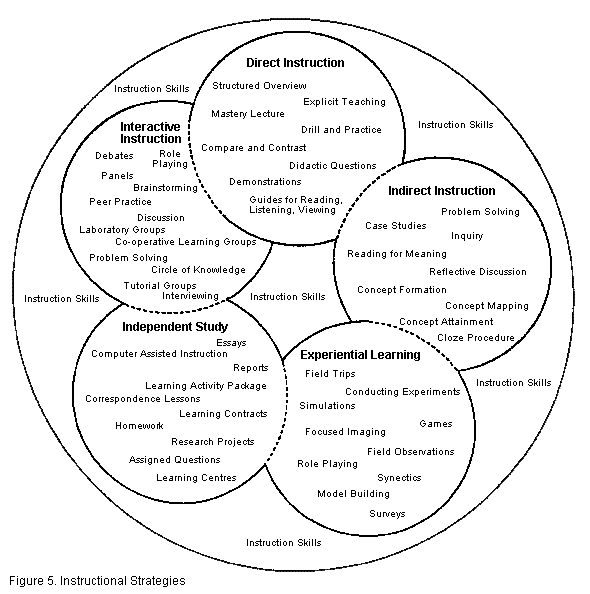
Role-Play is one of the instruction strategies which similar to brainstorming and case study. In the role-play training, trainers normally provide some information regarding the situation,such as work or interpersonal problems to trainees (Lawlor & Tovey, 2011).The trainees will then imitate the role of manager, other employee or client respectively and develop their communication skills to deal with different contingencies (Kramar, 2011).
Diagram is from http://teachinglearningrecources.pbworks.com/w/page/19919560/instructional%20Approaches
Why to use?
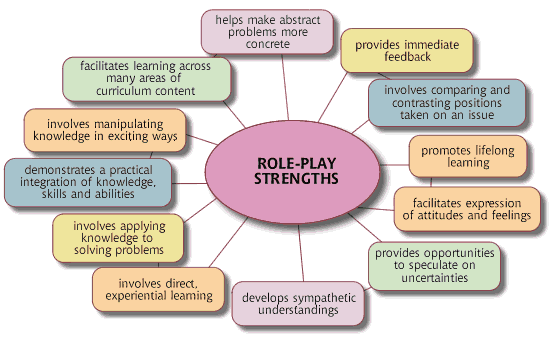
Role-Play is a powerful learning tool as traineers have to think on their feet and develop strategies quickly (Lawlor & Tovey, 2011). Also, it can give trainees the opportunity to gain insight into other person's perspective as well as experiencing how to deal with difficult situations (Fertleman, Gibbs, & Eisen, 2005).
By working together, as partners in planning, proposing and decision-making, you can make both the teaching and learning more productive (Perkins, Brown, 2008)
Role play contributes to the development of learning; it promotes a wide range of problem solving skills, as well as improves social relationship (Schell, 2009).
When to use?
Role play is easily to implement, you can use it in pairs, small groups or large groups (Lawlor & Tovey, 2011).
How to use?
To use role-play for improving communication skill effectively, we should
1.Before the role play, it is important to explain the purpose of the activity to the trainees. So that, they will find the activity
meaningful and be motivated to learn;
2.Given the clear instructions to the participants.For example, the characters of the role and the time limited;
3. A short video is valuable for quickly showing trainees how the role play works;
4.The trainer needs to monitor the time and degree of intensity and focus of the group’s attention during the activity(Noe, 2009).
Advantages:
1. Learn to share and take turns
2. Use your imagination
3. Explore situation from another person’s perspective
4. Develop self-confidence
5. Express ideas & feelings
6. Feel valued, listened to and taken seriously
7. Learn to collaborate with other
8. Have the chance to develop your own ideas
9. Learn about the culture of others and develop a greater understanding of their culture
10. Learn more about relationship
Disadvantages:
1. Role play provide limited information regarding the situation and it only focus on interpersonal responses (eg: resolve a conflict )
2. Outcomes depend on the emotional reactions of the other trainees.
